A guide for families in Hightown who have started to wonder whether someone they love could benefit from a little extra help at home. Written honestly, without pressure, from experience.
Hightown is one of those places that does not need to explain itself. Savills have called it one of Britain’s most desirable villages. The people who live here would probably shrug at that — they already knew.
The village sits between the open coast and the flat agricultural land of South Sefton, small and genuinely quiet. The beach, the sailing club, the Hightown Club, the particular openness of the landscape in every direction — these are things residents tend to have chosen rather than fallen into. Most people who live in Hightown chose it, and most of them intend to stay.
This page is for families who have started to notice that maintaining that life is becoming harder for someone they love. Not dramatically. Just a little harder than it was. And who are wondering, quietly, whether a small amount of support might make a real difference.
In a village this small, things tend to be noticed. But sometimes what changes most visibly to someone outside — the garden less tended, the trips to the village pub or the Hightown Club less frequent, the kitchen that is not quite as stocked as it used to be — is the last thing acknowledged by the person themselves.
The pattern is consistent across every community we work in. The early signs are small. Meals that have simplified. Errands that are getting left a day or two longer than they would have been. A parent who sounds a little less like themselves on the phone — not unwell, exactly, but quieter. Getting by rather than getting on.
In a village where privacy and self-sufficiency are valued, these things can go unmentioned for a long time. Families who visit and notice them are usually right to take them seriously.
Most families who call us are not yet certain what they need. They know something has shifted and they want to think it through. That is the right place to start.
The timing question is one that most families get wrong in the same direction: they wait too long.
This is usually for the right reasons. Raising the idea of help feels like it implies something. It might upset a parent who has always been completely independent. It might lead to a difficult conversation that could have waited. So families manage the worry privately and hope things plateau.
Sometimes they do. But the families who find the transition to home help most straightforward are consistently the ones who began it gradually, before it was urgent — when there was time to find the right person, to let trust develop slowly, to introduce a helper into a routine rather than into a crisis.
Home help is not an acknowledgement that independence has ended. It is, more accurately, one of the things that allows independence to continue. The practical support that keeps a week running — meals, shopping, housekeeping, company — is what makes everything else sustainable.
For older residents of Hightown who want to remain in this village — close to the coast they know, within a community that has been theirs for years — the right support in place at the right time is what makes that possible.
If something here has felt familiar, a conversation is the sensible next step. It costs nothing and commits you to nothing.
Hightown has a population of around two thousand people. That number matters. It means that in this village, most people know most people — not superficially, but genuinely. The Hightown Club has been here for over a century. The sailing club that shares the centenary. St Stephen’s Church. The pub by the station. These are not just amenities; they are the infrastructure of a community that has depth and continuity.
For older residents, the attachment to all of this is not sentimental nostalgia. It is the practical reality of a life built here. The neighbours who have been neighbours for thirty years. The walk to the beach that has been the same walk since childhood. The specific quiet of this particular village, which is different from the quiet of anywhere else.
What home help protects, in a place like this, is not just the practicalities of daily life but the conditions under which that life continues to make sense. When the shopping and the cooking and the housekeeping become harder to sustain, the risk is not only physical. It is the gradual erosion of a way of living that has been built over a lifetime.
The right support — delivered consistently, by someone who becomes genuinely familiar — holds those conditions steady. It allows someone to remain in Hightown, in the home they know, for considerably longer than they might otherwise.
We cover Hightown village, Blundellsands and the surrounding L38 postcode. If you are unsure whether your road falls within our area, please call us and we will confirm immediately.
Select Home Care Services was founded by three registered nurses based in nearby Formby. They built the service they would have chosen for their own mothers — and they remain personally involved in every client relationship. When you call, one of them answers.
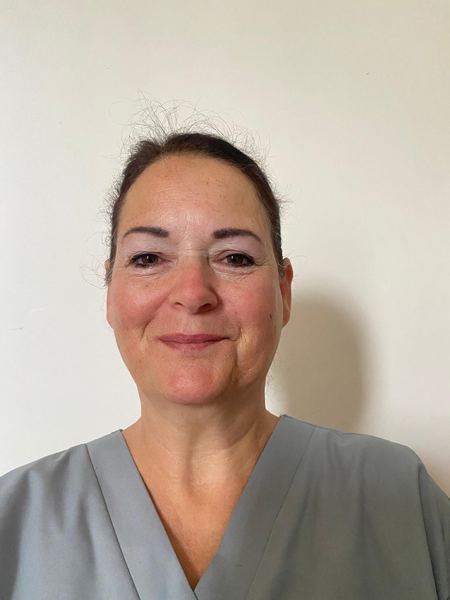
With years of hands-on care experience in residential and community settings, Anita brings practical knowledge and quiet authority to everything we do. A mother of eight, she understands family life from the inside — the weight of responsibility, the importance of trust, and what it means to invite someone into a home that matters.
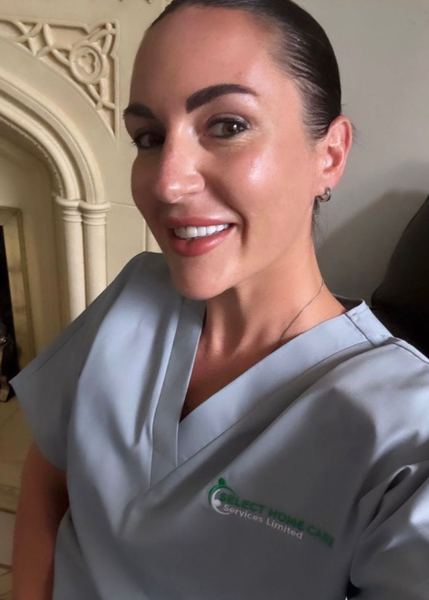
A qualified Registered Nurse, Natalie ensures every aspect of our service is safe, considered and clinically informed. Her professional framework gives families genuine confidence — knowing nursing expertise underpins everything, even when the tasks themselves are practical.

Nicola’s nursing career has always been defined by attention to the whole person — not just the presenting need, but the emotional experience and sense of identity. She ensures every client feels genuinely heard, valued and cared for.
These are two distinct things, and families should not be expected to arrive already knowing the difference.
Regulated personal care — bathing, dressing, toileting, medication administration — requires CQC registration. Select Home Care Services is not a CQC-registered provider and does not carry out these tasks.
What we provide is practical, social and domestic support: meals, shopping, housekeeping, companionship, appointment accompaniment, digital help, welfare check-in calls, post-hospital recovery support and respite for family carers.
If regulated care is what is needed, we will say so clearly and help you find appropriate provision. We would rather be honest about this than overstate what we offer.
We do not provide
Bathing & washingDressingToiletingMedication administrationNursing treatmentWe do provide
CompanionshipMeal preparationShopping & errandsLight housekeepingAppointment accompanimentDigital supportPost-hospital supportWelfare check-in callsRespite for family carersHome help and regulated personal care often work comfortably alongside each other. We are experienced in supporting clients who receive personal care from a separate provider and home help from us.
£33 per hour. Every service. No exceptions.
No registration fees · No hidden costs · No minimum commitment · No long-term contracts
If you have a question not answered here, please call us on 01704 333 188. We are always happy to talk without any pressure.
See All QuestionsNo paperwork. No assessment. No commitment of any kind. One of our founders will answer, listen carefully, and give you an honest view of whether home help is what is needed.
Some families call us having thought about it for a day. Others have been sitting with the question for months. Either is fine. The conversation will be the same: unhurried, honest and without any pressure.
If we are not the right fit, we will say so — and do what we can to point you in the right direction.